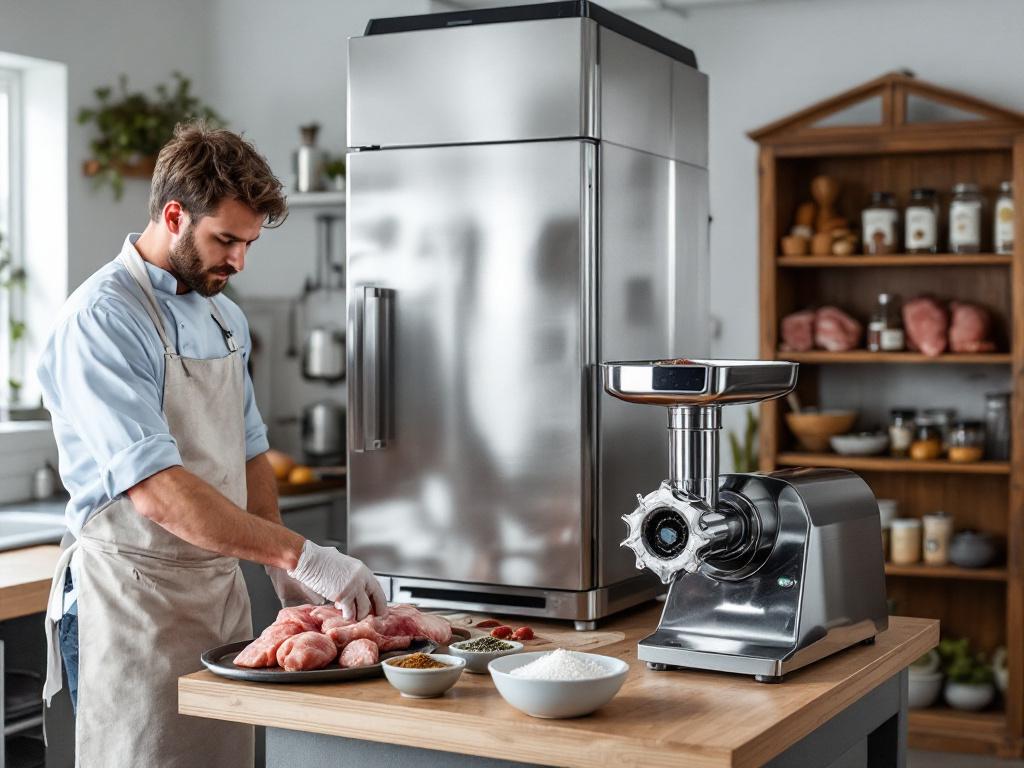
Imagine you're a mad scientist, but instead of creating a monster, you're crafting the perfect environment for curing meat. It's like building a tiny, delicious ecosystem where temperature, humidity, and time all dance together to transform ordinary cuts into gourmet delights. Welcome to the world of meat curing chambers, where every slice is a testament to your culinary genius.
 A well-organized meat curing chamber with hanging sausages and a digital thermometer.
Essential Equipment for Meat Curing
Setting up your meat curing chamber is like building a dream kitchen for your meats. You need the right tools to create the perfect environment. Here’s what you need to know:
Pro Insider Secrets
- Hygrometers and Thermometers: These are your eyes and ears inside the chamber. Accurate readings ensure your meat is curing at the optimal temperature and humidity.
- Refrigeration Unit: A reliable fridge is the backbone of your setup. It keeps the environment cool and stable, preventing spoilage.
- Racks and Hooks: Proper airflow is crucial. Using racks and hooks allows the meat to hang freely, promoting even drying.
Related Product Links:
- OXO Good Grips Chef's Precision Digital Instant Read Thermometer
- COSORI 6 Tray Food Dehydrator for Jerky
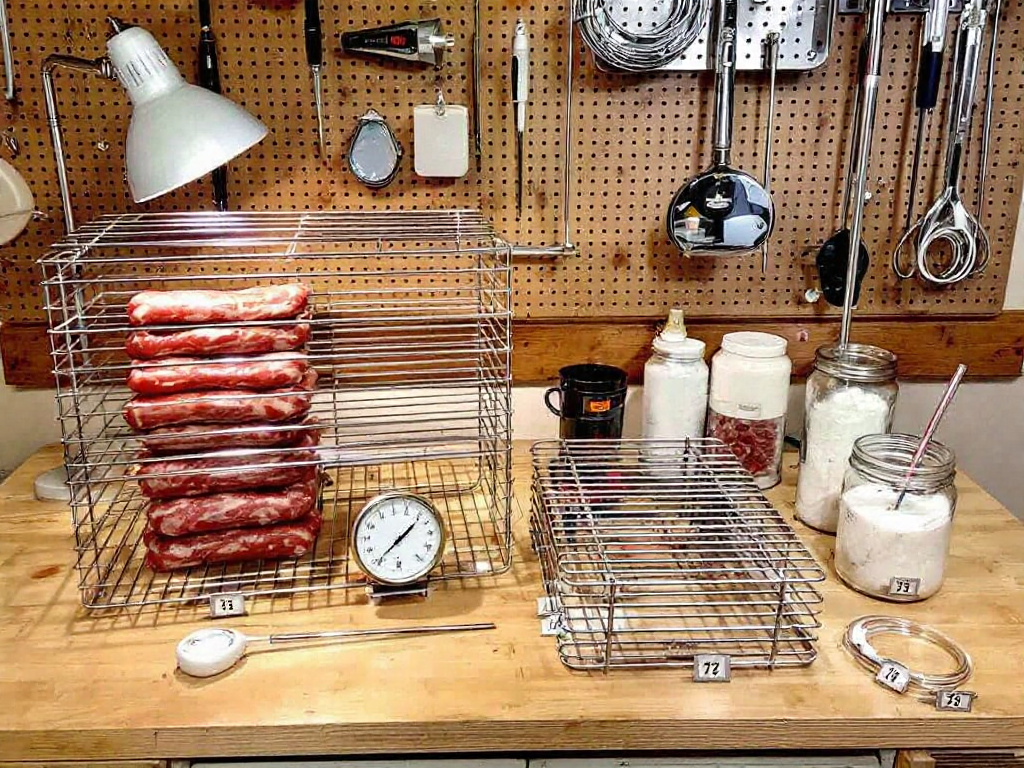 Essential equipment for meat curing, including a hygrometer, thermometer, and racks.
Perfect Temperature and Humidity Levels
Maintaining the perfect temperature and humidity is like walking a tightrope—one misstep, and your meat could be ruined. Here’s how to keep everything in balance:
Myth-Busting Corner
- Myth: Higher humidity means better curing.
- Reality: Too much humidity can lead to mold growth. The ideal range is 70-80% humidity.
- What This Means for You: Invest in a good hygrometer and keep a close eye on those levels.
Practical Hacks:
- Use a Humidifier: If your chamber is too dry, a humidifier can help maintain the right humidity levels.
- Regular Monitoring: Check your chamber daily to ensure the environment is stable.
Related Product Links:
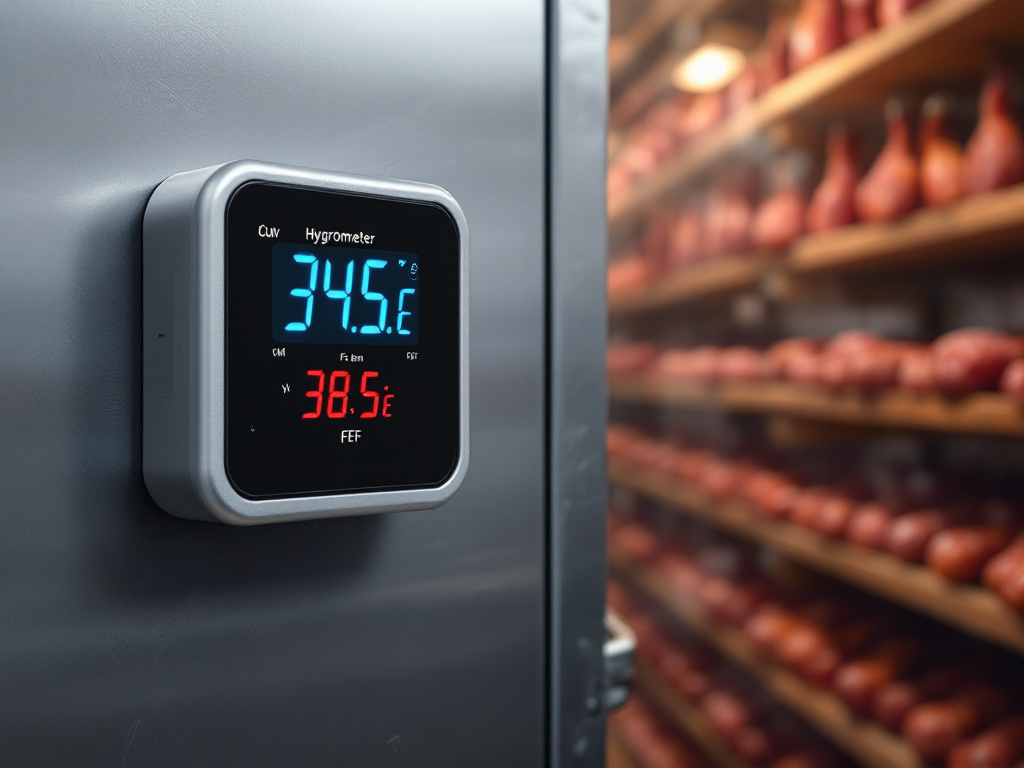 A digital hygrometer and thermometer monitoring the meat curing chamber.
Curing Process Steps and Tips
The curing process is a journey, and every step counts. Here’s a breakdown of what you need to do:
Expert Roundup
- Preparation: Start with fresh, high-quality meat. Trim it to the desired size and apply your curing mix evenly.
- Curing Mix: Use a combination of salt, spices, and any flavorings you desire. Ensure the meat is fully coated.
- Storage: Hang the meat in your chamber, maintaining a temperature between 50°F to 60°F (10°C to 15°C) and humidity around 70-80%.
Real-World Applications:
- Patience Pays Off: Curing takes time. Check your meat periodically, but avoid the temptation to rush the process.
- Experiment: Don’t be afraid to try different spices and techniques to find what works best for you.
Related Product Links:
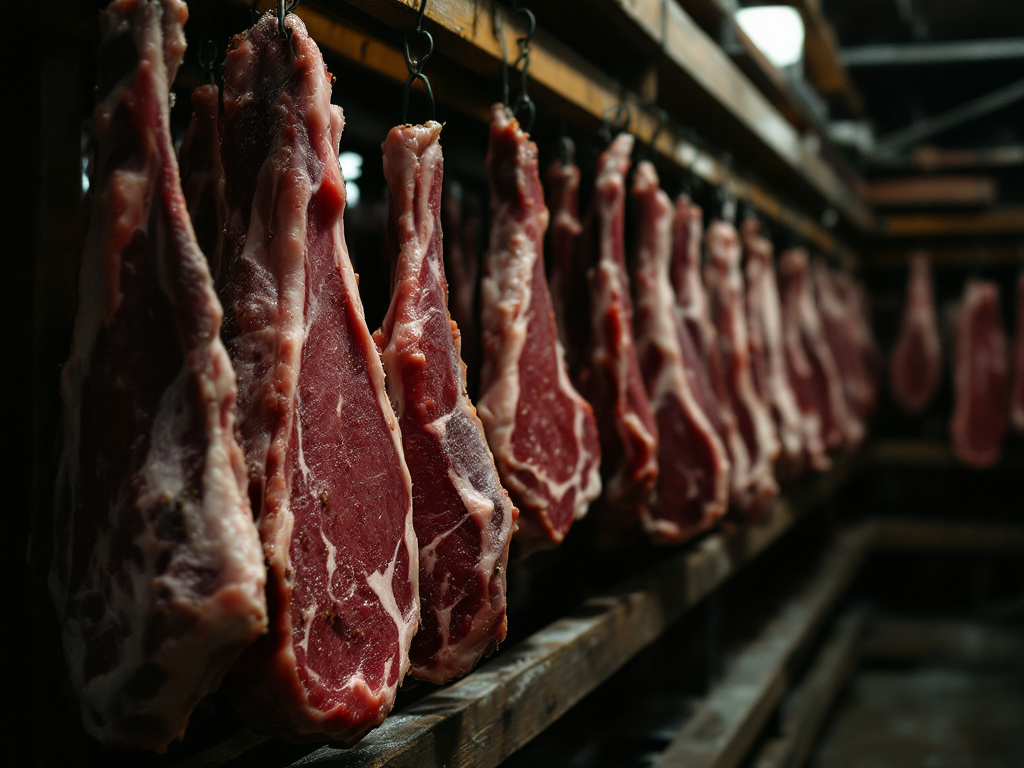 Meat hanging in a curing chamber, showing the different stages of the curing process.
Advanced Techniques and Equipment
Ready to take your meat curing to the next level? Here’s how to dive into advanced techniques and equipment:
Behind-the-Scenes Insights
- Fermentation: Adding a fermentation stage can enhance the flavor and texture of your cured meats.
- Cold Smoking: This technique adds a smoky flavor without cooking the meat, perfect for bacon and sausages.
- Specialized Equipment: Investing in a pH meter and advanced humidity controllers can give you even more control over the curing process.
Future Trends:
- Sustainable Practices: Using natural curing agents and energy-efficient equipment is becoming more popular.
- DIY Innovations: Home curing enthusiasts are constantly finding new ways to improve their setups, from solar-powered dehydrators to composting meat scraps.
Related Product Links:
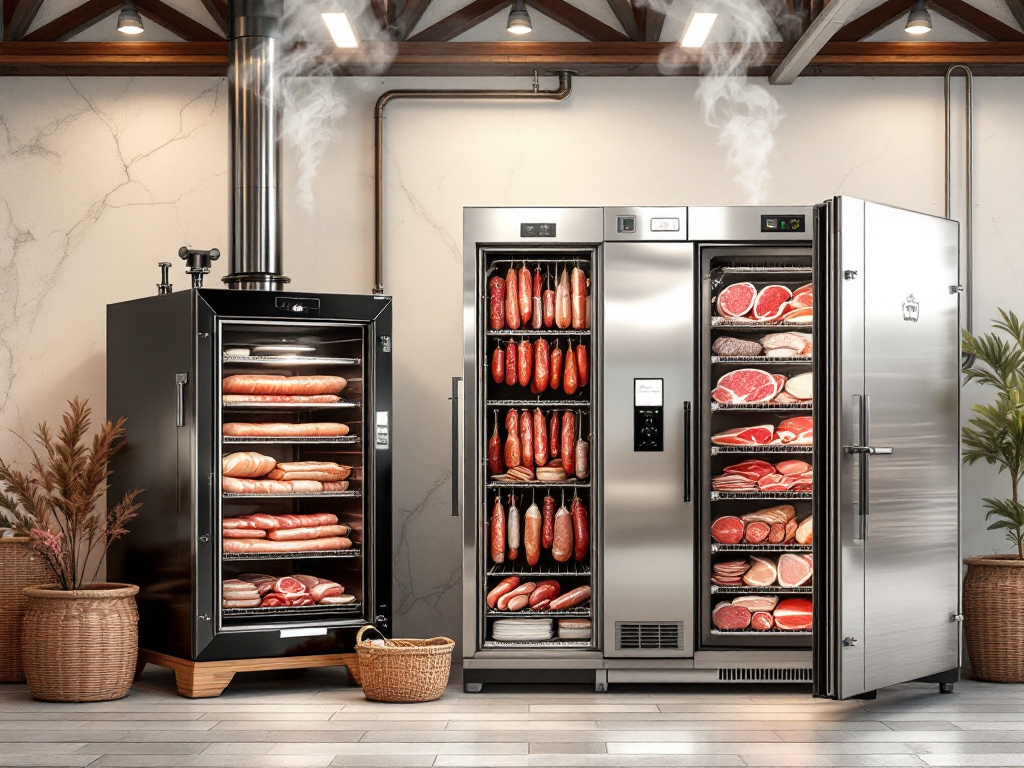 Advanced meat curing setup with fermentation and cold smoking equipment.
Sustainable and Eco-Friendly Curing Practices
Curing meat doesn’t have to be hard on the environment. Here’s how to make your curing practices more sustainable:
Pro Insider Secrets
- Natural Ingredients: Use non-iodized salt, herbs, and spices to minimize environmental impact.
- Energy Efficiency: Opt for energy-efficient dehydrators and refrigeration units to reduce your carbon footprint.
- Minimize Waste: Compost meat scraps and repurpose curing by-products to reduce waste.
Related Product Links:
- Reusable Silicone Ziplock Bags for Food Storage
- Vtopmart 5.2L Airtight Food Storage Containers 4 Pack
 A sustainable meat curing setup with natural ingredients and energy-efficient equipment.
Curing Meats for Special Diets
Whether you’re following a keto, paleo, or gluten-free diet, you can still enjoy cured meats. Here’s how to adapt your curing process:
Myth-Busting Corner
- Myth: Cured meats are always high in sodium and preservatives.
- Reality: You can control the ingredients and make healthier choices.
- What This Means for You: Experiment with different spices and natural preservatives to fit your dietary needs.
Related Product Links:
 Cured meats prepared for special diets, including keto, paleo, and gluten-free options.
Funny Story Time!
Picture this: It's my first attempt at curing prosciutto. I've got this massive leg of pork, salted and pressed, hanging in my DIY curing chamber. Days turn into weeks, and I'm checking on it like a nervous parent. One day, I notice something's off. The humidity is through the roof, and my prosciutto looks more like a science experiment gone wrong.
I panic, thinking I've ruined weeks of work. Turns out, I forgot to account for the humidity spike from adding new meat to the chamber. Lesson learned: always monitor your environment closely, especially when introducing new variables. Now, every time I cure meat, I laugh at my rookie mistake and appreciate the journey even more.
Conclusion
Setting up the perfect meat curing chamber is a blend of science, art, and a whole lot of patience. By following these guidelines and experimenting with different techniques, you can create delicious, perfectly cured meats right at home. So, grab your tools, get creative, and dive into the world of meat curing. Your taste buds will thank you!
FAQ Section
1. What is the ideal temperature and humidity for curing meat?
- The ideal temperature for curing meat is between 50°F to 60°F (10°C to 15°C), and the humidity should be maintained between 70% to 80%. These conditions help prevent the growth of harmful bacteria and ensure proper drying and flavor development .
2. How long does it take to cure meat?
- The curing time varies depending on the type and thickness of the meat. Thinner cuts may take a few days, while larger pieces like prosciutto can take several weeks to months. It's essential to monitor the meat regularly to ensure it's curing properly .
3. Can I cure meat without a specialized chamber?
- While it's possible to cure meat in a regular refrigerator or even a cool, dry closet, using a specialized curing chamber provides better control over temperature and humidity, leading to more consistent results. A DIY curing chamber can be made using a second-hand fridge or wine cooler .
4. What are some common mistakes to avoid in meat curing?
- Common mistakes include not maintaining consistent temperature and humidity, over-salting the meat, and not allowing enough time for the curing process. It's also crucial to ensure the curing environment is free from molds and bacteria that could affect the meat .
5. How do I know if my cured meat is safe to eat?
- Properly cured meat should have a firm texture, a pleasant aroma, and no signs of mold or spoilage. Using a meat thermometer to ensure the internal temperature has reached safe levels and following proper storage guidelines can help ensure the meat is safe to consume .
6. What equipment do I need for a basic meat curing setup?
- A basic meat curing setup includes a reliable refrigeration unit, a hygrometer, a thermometer, racks or hooks for hanging the meat, and optionally, a fan for air circulation. These tools help maintain the ideal curing environment and ensure the meat cures evenly .
7. Can I use any type of salt for curing meat?
- It's best to use non-iodized salt for curing meat, as iodized salt can impart a metallic taste. Kosher salt or sea salt are good options. For longer curing processes, pink curing salt (Prague powder) is often used to inhibit bacterial growth .
8. How do I store cured meat?
- Cured meat should be stored in a cool, dry place, preferably in an airtight container or vacuum-sealed bag to prevent moisture loss and contamination. Proper storage can extend the shelf life of cured meats significantly .
9. What are some beginner-friendly meats to cure?
- Beginner-friendly meats to cure include bacon, pancetta, and simple sausages like pepperoni. These meats have shorter curing times and are more forgiving, making them ideal for those new to meat curing .
10. How can I add flavor to my cured meats?
- Adding flavor to cured meats can be achieved by using various spices, herbs, and aromatics in the curing mixture. Experimenting with different combinations can create unique and delicious flavors. Additionally, smoking or aging the meat can enhance its taste .