Learn Simple Tips to Keep Your French Cured Meats Fresh and Delicious
Alright, listen up! If you're a fan of French cured meats, you know that storing them properly is bloody important. We're talking about keeping those delicious flavors intact and ensuring every bite is as fresh as the day you bought them. So, let's dive in and learn how to master the art of storing French cured meats.

A charcuterie board with a variety of French cured meats, cheeses, and accompaniments, with a focus on the meats.
Choose the Right Environment for Storage
When it comes to enjoying your favorite French cured meats, choosing the right environment for storage is key! You want to keep them fresh and flavorful, allowing their unique tastes to shine. So, let’s break down what you need to consider.
Temperature Matters
First off, temperature matters. Ideally, you want to store your cured meats in a cool, dry place. A dedicated refrigerator works wonders, maintaining a stable temperature between 34°F and 40°F is perfect. Avoid areas that get too warm, like near the oven or in direct sunlight. If you’re thinking of a cellar or pantry, just make sure it’s not too humid—excess moisture can lead to spoilage!
Humidity Control
Humidity is the next factor. Cured meats benefit from a slightly humid environment, but there's a fine line! Aim for around 70% humidity to keep the meat from drying out too much. Cheese drawers in your fridge can sometimes maintain this ideal condition, or you could invest in a small humidifier for a dedicated meat storage area.
Light Exposure
Finally, consider light exposure. Light can speed up degradation, so keep your cured meats away from bright, direct light. A dark cupboard or a wrapping that blocks light can help extend their shelf life, so you get to enjoy those delicious flavors longer.
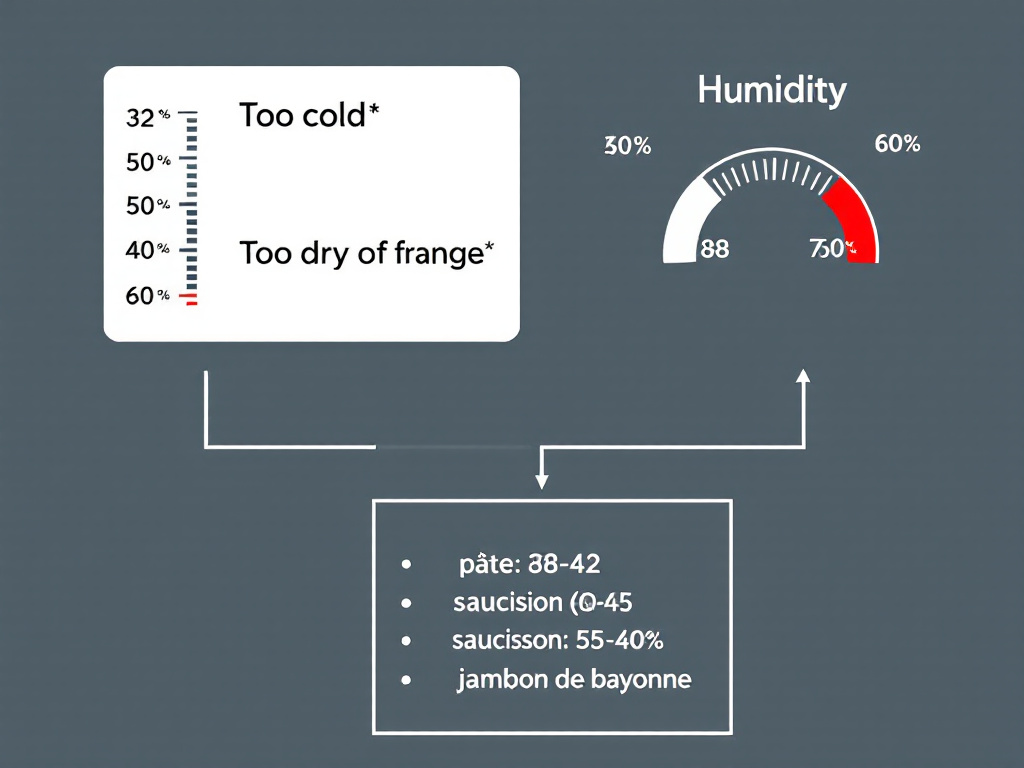
A diagram showing the ideal temperature and humidity ranges for storing French cured meats, with labels for each range.
Hints and Tips:
- Use a thermometer to monitor the temperature in your storage area.
- Consider using a hygrometer to keep track of humidity levels.
- Rotate your cured meats regularly to ensure even exposure to temperature and humidity.
Signs Your Cured Meat Needs Attention
When you’re indulging in some delicious French cured meats, it’s important to keep an eye on their condition. If you notice anything unusual, that could be a sign that your meat needs some attention. Here are some red flags to watch out for:
Off Smells
Fresh cured meats should have a pleasant, savory aroma. If the scent turns sour or overly strong, it’s best to trust your nose and reassess your storage methods.
Discoloration
While some color variation is normal, any unusual spots—especially green, grey, or black—could indicate spoilage. This might mean it’s time to toss that piece and look into proper storage methods for French cured meats.
Texture Changes
Cured meat should feel firm and slightly tacky to the touch. If it’s overly slimy or has a weird texture, don’t take chances. Cleanliness and proper handling help maintain the right texture.
Excessive Drying
While a bit of dryness is expected with cured meats, if they feel too hard or are crumbling, your storage location might be too dry. Reevaluate to find the right balance.

An image showing the signs of spoilage in French cured meats, such as discoloration, off smells, and texture changes.
Hints and Tips:
- Regularly inspect your cured meats for any signs of spoilage.
- If you notice any off smells or discoloration, it’s better to be safe and discard the meat.
- Maintain good hygiene practices when handling cured meats to prevent contamination.
Tips for Long-Lasting Freshness
When it comes to enjoying your French cured meats, keeping them fresh for as long as possible is essential. Here are some handy tips for you to ensure that you’re using the proper storage methods for French cured meats.
Keep It Cool
Always keep your cured meats in the fridge. A temperature between 34°F and 40°F is ideal. If you have an airtight container, use it! This helps in preventing moisture from getting in, which can lead to spoilage. If you don't have one, wrapping the meat in butcher paper or wax paper can be another good option. Just make sure it’s not plastic wrap, as that can trap moisture and cause the meat to go bad faster.
Slice as You Go
Next, think about how much you plan to consume. If you've got a large quantity of cured meats, consider slicing only what you need at the moment. Keeping the rest whole helps it stay fresh longer, as the surface area is minimized, reducing exposure to air. When you slice, use a clean, sharp knife to avoid introducing bacteria.
Monitor Humidity
Finally, keep an eye on the humidity in your fridge. Cured meats don’t like super humid environments, so if you notice moisture collecting in your storage container, it's time to change things up. A piece of dry paper towel can help absorb excess moisture. Remember, a little effort goes a long way in keeping your French cured meats delicious and fresh!
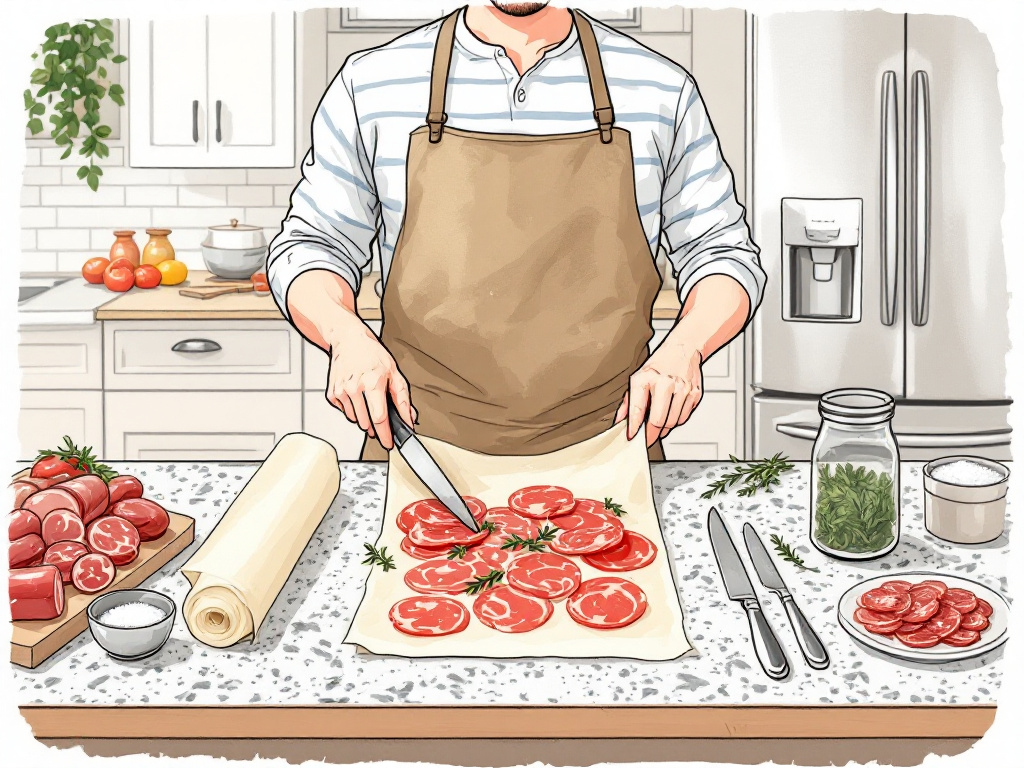
A step-by-step illustration of how to properly wrap and store French cured meats in the refrigerator.
Hints and Tips:
- Use airtight containers to store your cured meats in the fridge.
- Wrap cured meats in butcher paper or wax paper to allow them to breathe.
- Slice only what you need and keep the rest whole to maintain freshness.
Funny Story Time!
Let me tell you a story about a time when I was filming a segment for a cooking show. We had this beautiful charcuterie board set up with all sorts of French cured meats—saucisson, jambon, you name it. Everything was perfect, the lighting was spot on, and the camera was rolling. Suddenly, one of the crew members accidentally knocked over a bottle of wine, and it spilled all over the charcuterie board. Talk about a disaster! We had to quickly salvage what we could and rearrange the board. Lesson learned: always keep the wine far away from the charcuterie until after the shoot!
Conclusion
Alright, there you have it! Mastering the art of storing French cured meats is all about keeping them cool, controlling humidity, and watching out for signs of spoilage. With these tips, you'll be enjoying fresh and delicious cured meats every time. So, go ahead and impress your friends and family with your newfound knowledge. Happy storing!
References
- Curing Chamber Guide - This guide provides detailed information on how to store cured meats effectively to extend their shelf life .
- Serious Eats - An introduction to French charcuterie, including essential cured meats and more .
- Survival Freedom - A comprehensive guide on how long cured meat lasts with a storage chart .
- Real Simple - Expert-approved storage tips to keep your meat fresh and safe .
- Wikipedia - Detailed information about charcuterie, including its history and various types .ious and fresh!