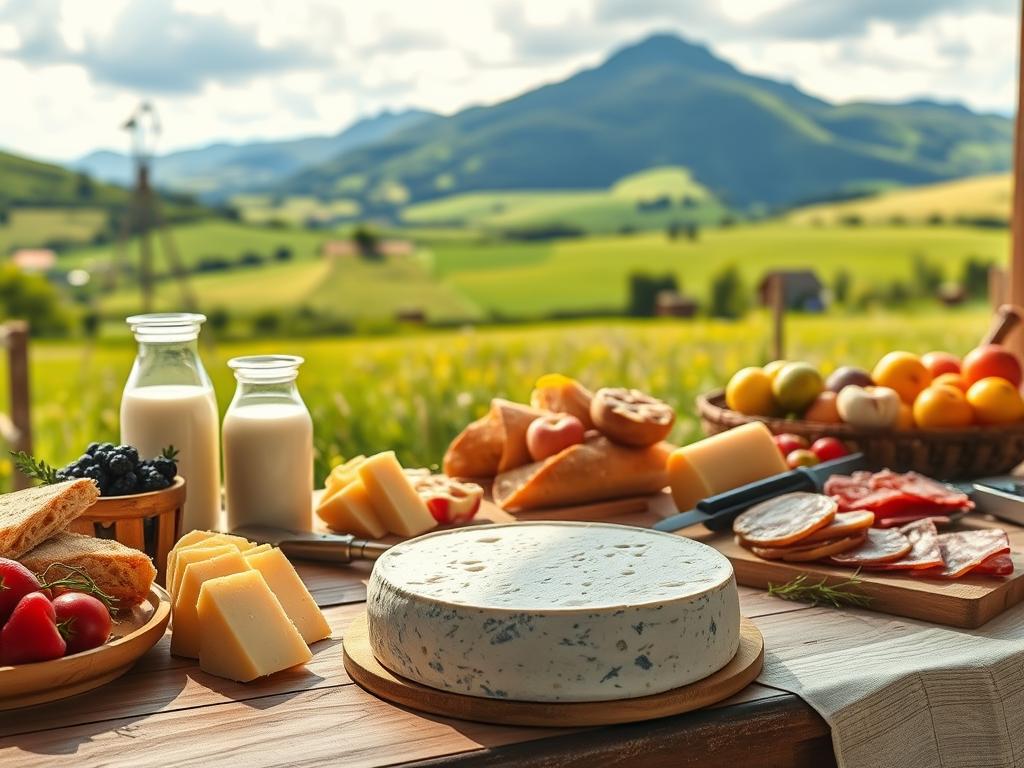
Discover Bleu de Gex, the mild and creamy blue cheese from France’s Jura Mountains. Learn about its rich heritage, artisanal production, and delicate nutty flavor. Find out why this rare French cheese pairs perfectly with Jura wines and honey. Explore where to buy it and how to savor it like a true connoisseur. Dive into the story of this underrated gem and elevate your cheese board today!
Estimated reading time: 10 minutes
Key Takeaways
- Bleu de Gex is a mild, creamy blue cheese from France's Jura Mountains
- Made from raw cow's milk with a nutty, slightly sweet flavor profile
- Has AOC protected status since 1977
- Traditional production methods include wooden board aging
- Pairs beautifully with Jura wines and honey
Table of Contents
- The Rich Heritage of Bleu de Gex
- Traditional Cheese Production
- Flavor Exploration
- Nutritional Benefits
- Where to Buy
- Serving and Storage Tips
- Frequently Asked Questions
The Rich Heritage of Bleu de Gex in the Jura Mountains
Nestled in the misty peaks of France's Jura Mountains, Bleu de Gex is a blue cheese that whispers of tradition rather than shouts for attention. Unlike its bold cousins like Roquefort, this creamy, semi-soft cheese made from raw cow's milk offers a milder, nutty flavor with a touch of fruity sweetness.
The Historical Journey of Bleu de Gex
The history of Bleu de Gex dates back to the 13th century when the Savoy monks settling in Upper Jura brought with them the techniques for making blue-veined cheese. The cheese was originally made from sheep or goat milk, but locals later switched to cow's milk from the hardy Montbéliard breed, whose rich milk thrives in the alpine climate.
During the French Revolution, monks hid wheels of Bleu de Gex in mountain caves to protect them from confiscation. The cool, damp conditions accidentally perfected the cheese's blue veining—a happy accident that's now central to its identity!
The Unique Characteristics of Bleu de Gex
Bleu de Gex is known for its mild, creamy flavor and unique blue veining. The cheese is made from raw cow's milk and aged for a minimum of three weeks. The aging process takes place in humid cellars, where the cheese develops its delicate tang without becoming overpowering.
The cheese is stamped with the word "Gex" on its rind, indicating its protected status. The rind also develops a white powder on it, which can be wiped off before eating. The texture of the cheese is dense, close, and supple, shot through with fine blue-green veins.
The Art of Crafting Bleu de Gex: Traditional Cheese Production
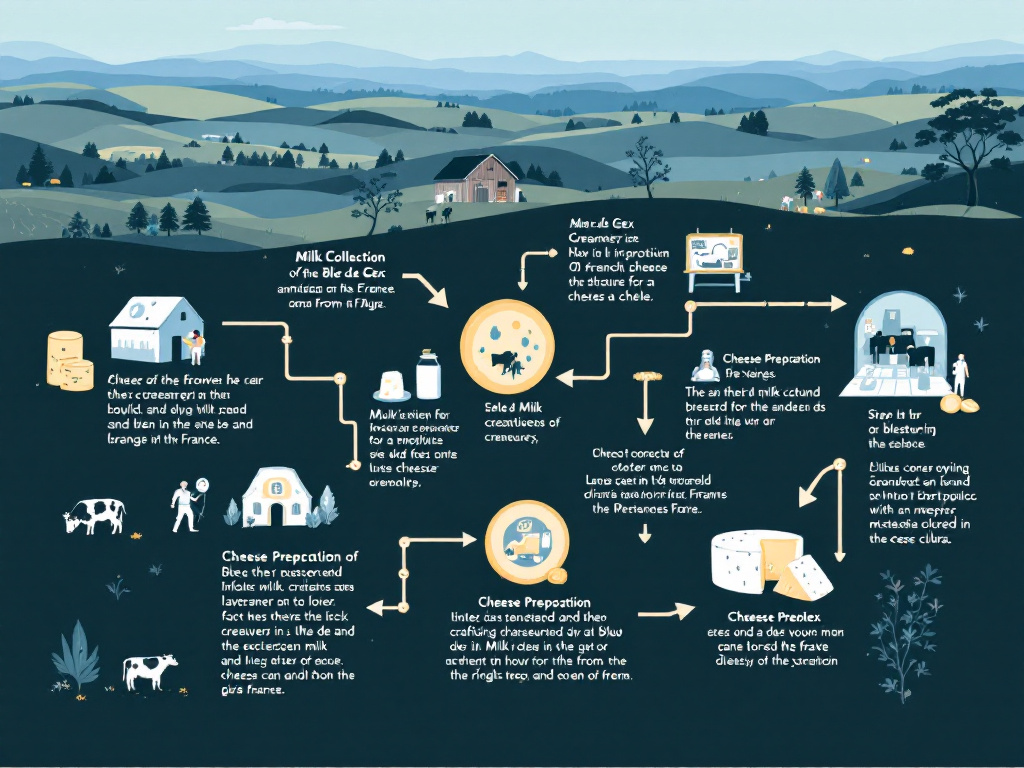
Creating Bleu de Gex is like conducting a symphony—every step matters. Here's how it's done:
- Milk Sourcing: Raw milk from Montbéliard cows, grazed on Jura's wildflower meadows, forms the base.
- Blue Veining: Artisans add Penicillium cultures, which create those signature marbled veins as the curds form.
- Aging: The cheese ages for 3+ weeks in humid cellars, where it develops its delicate tang without becoming overpowering.
"The wood breathes," says cheesemaker François Leroux, "letting the cheese develop its personality slowly, like a good wine." Source: Montagnes du Jura
What Does Bleu de Gex Taste Like? A Flavor Exploration
Imagine a blue cheese that's friendly to timid taste buds. Bleu de Gex skips the intense saltiness of Roquefort, offering instead a creamy, slightly crumbly texture with hints of hazelnut and dried fruit.
Pair it like a pro:
- Wines: Local Jura wines made from Poulsard grapes or a crisp Beaujolais
- Foods: Drizzle honey over a slice, pair with pears, or crumble into a walnut-studded salad
Is Bleu de Gex Healthy? Nutritional Benefits of French Blue Cheese
Beyond its flavor, Bleu de Gex packs a nutritious punch:
- Calcium & Protein: Great for bones and muscles
- Probiotics: Raw milk fosters gut-friendly bacteria
- Lower Lactose: Fermentation breaks down lactose, making it easier to digest for some
Finding Bleu de Gex: Where to Buy This Rare French Cheese
In France, Bleu de Gex graces most fromageries, but abroad, it's rarer. U.S. raw-milk restrictions mean you'll need to hunt for imported versions at specialty shops or online retailers like La Fromagerie.
Do's and Don'ts When Serving and Eating Bleu de Gex
- Do: Serve at room temperature. Let it sit out 30 minutes before enjoying.
- Don't: Pair with bold reds—they'll overwhelm it. Stick to light, fruity wines.
- Do: Try it in a savory tart with caramelized onions.
How to Store Bleu de Gex
Wrap it in wax paper, then foil, and store in the fridge's cheese drawer (4°C/39°F). Avoid plastic wrap—it traps moisture and kills flavor.
Bleu de Gex by the Numbers
| Fact | Detail |
|---|---|
| Annual Production | ~500 tons Source: Wikipedia |
| AOC Certification Year | 1977 |
| Aging Period | 21-28 days |
| Number of Producers | 48 dairy farmers and their two cooperative dairies |
Recent Developments in the World of Bleu de Gex
The world of Bleu de Gex has seen some interesting developments recently, particularly in terms of its availability and recognition. Despite its rich history and unique flavor profile, Bleu de Gex faces challenges in international markets, particularly in the United States. Due to changes in U.S. regulations regarding the importation of soft cheeses, Bleu de Gex, which is made from unpasteurized milk, cannot be legally sold in the United States. This regulation, which was updated in November 2004, requires that all soft cheeses from France must be made with pasteurized milk in French-certified plants to be sold in the U.S. market. This has led to a significant barrier for American cheese enthusiasts who wish to experience this traditional French cheese Wikipedia.
However, efforts to promote and preserve Bleu de Gex continue within its native region. The cheese is produced by a dedicated group of 48 dairy farmers and their cooperative dairies, along with artisanal cheesemakers located in specific areas of the Jura region. These producers adhere to strict guidelines to ensure the authenticity and quality of Bleu de Gex, maintaining its Appellation d'Origine Contrôlée (AOC) status, which it has held since 1977.
Production and Promotion
The production of Bleu de Gex is a meticulous process that involves traditional methods passed down through generations. The milk used comes exclusively from Montbéliard cows, which graze on the lush pastures of the Jura Mountains. The cheese is aged for a minimum of three weeks, during which it develops its characteristic blue veining and creamy texture. Each wheel of Bleu de Gex is stamped with the word "Gex," signifying its protected status and origin.
Promotional efforts by organizations such as the Syndicat Interprofessionnel de Défense du Bleu de Gex Haut-Jura and the Confrérie des amateurs du Bleu de Gex play a crucial role in maintaining the cheese's reputation and ensuring its continued production according to traditional standards. These groups work tirelessly to promote Bleu de Gex, both locally and internationally, through various events and marketing initiatives.
Culinary Uses and Recipes
 Bleu de Gex is celebrated not only for its unique taste but also for its versatility in the kitchen. It can be enjoyed in a variety of dishes, from salads to sauces, and even as a standalone cheese on a cheese platter. Its mild, nutty flavor makes it a favorite among those who appreciate blue cheeses but prefer a less intense option. Here are a few popular ways to enjoy Bleu de Gex:
| Dish | Description |
|---|---|
| Fondue au Bleu de Gex | A creamy and indulgent fondue that highlights the cheese's rich flavors. |
| Sauce au Bleu de Gex | A versatile sauce that can be drizzled over meats or vegetables. |
| Raclette au Bleu | A twist on the classic raclette, incorporating the unique taste of Bleu de Gex. |
| Tarte au Bleu de Gex | A savory tart that pairs the cheese with fruits like pears for a delightful contrast. |
| Salade du terroir au Bleu de Gex | A fresh salad that combines local greens with the creamy cheese. |
These dishes not only showcase the versatility of Bleu de Gex but also highlight its ability to enhance a wide range of culinary creations Bleu de Gex Official Site.
The Delightful World of Bleu de Gex
Bleu de Gex is a true gem of the Jura Mountains, offering a unique blend of history, tradition, and flavor. From its humble beginnings with Savoyard monks to its modern-day production in small mountain dairies, this cheese has a story that's as rich as its taste.
Whether you're a cheese connoisseur or a curious foodie, Bleu de Gex is a must-try. Its mild, creamy flavor and unique blue veining make it a standout in the world of blue cheeses. So why not elevate your cheese board today and explore the delightful world of Bleu de Gex?
Visit our French Cheese Category to shop for the right cheese for you and discover more exquisite French cheeses!
Frequently Asked Questions About French Cheese
-
What makes Bleu de Gex different from other blue cheeses? Bleu de Gex is milder and less salty than Roquefort, with a creamy texture and nutty undertones. It's made exclusively from raw cow's milk in the Jura Mountains.
-
Can I freeze French cheese to make it last longer? Soft cheeses like Brie don't freeze well, but harder varieties like Comté can be frozen for up to 2 months. Wrap tightly in foil first!
-
Are there vegetarian-friendly French cheeses? Yes! Look for cheeses made with microbial rennet, like some types of Camembert or Chèvre. Always check labels.
-
What's the best way to serve a cheese board? Include a mix of textures (soft, hard, crumbly) and flavors (mild, sharp, tangy). Add fruits, nuts, and crusty bread for balance.
-
Why does France have so many cheese varieties? France's diverse climates, terrains, and centuries-old traditions have led to over 1,200 unique cheeses—each region has its specialties!